

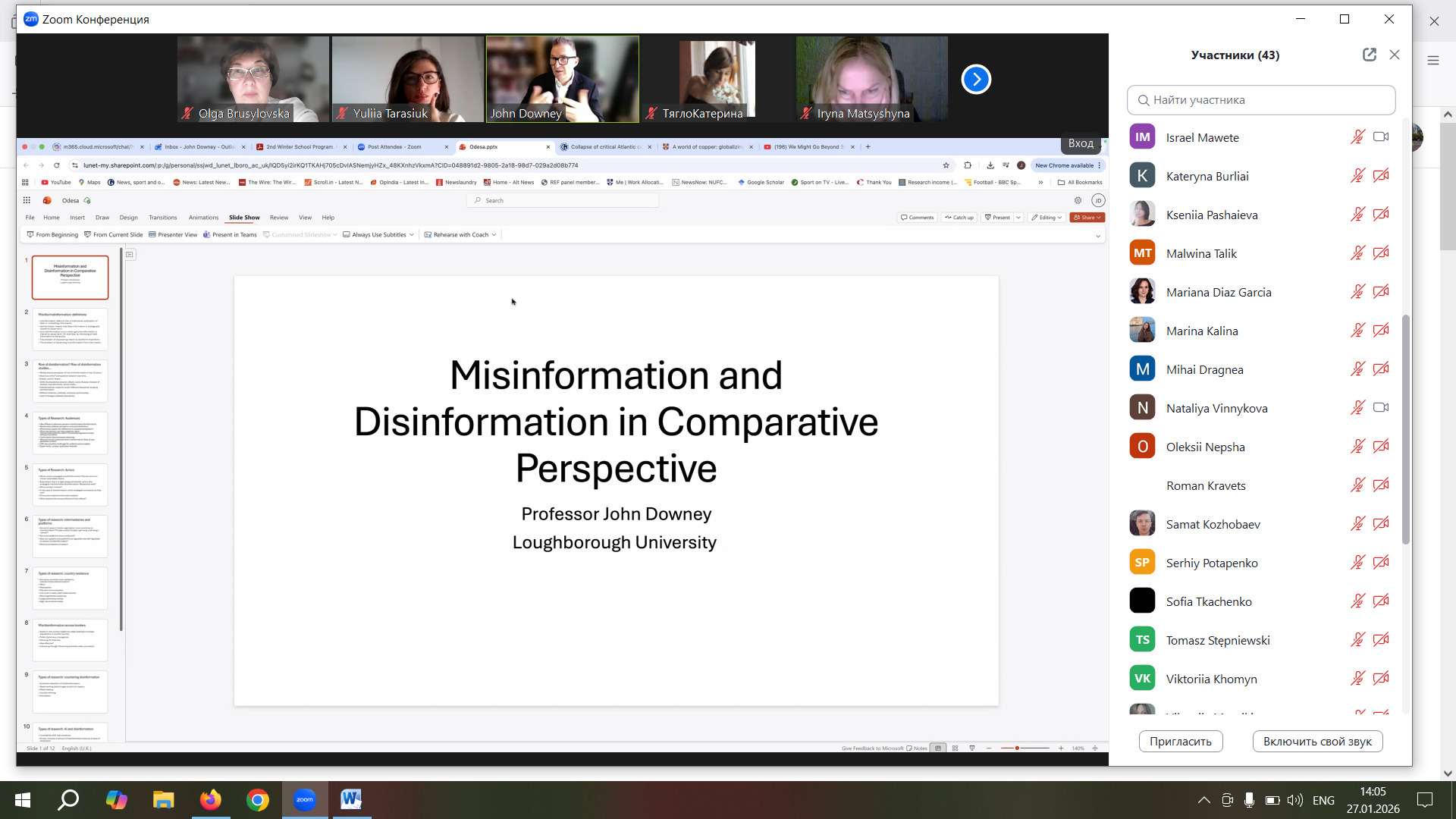
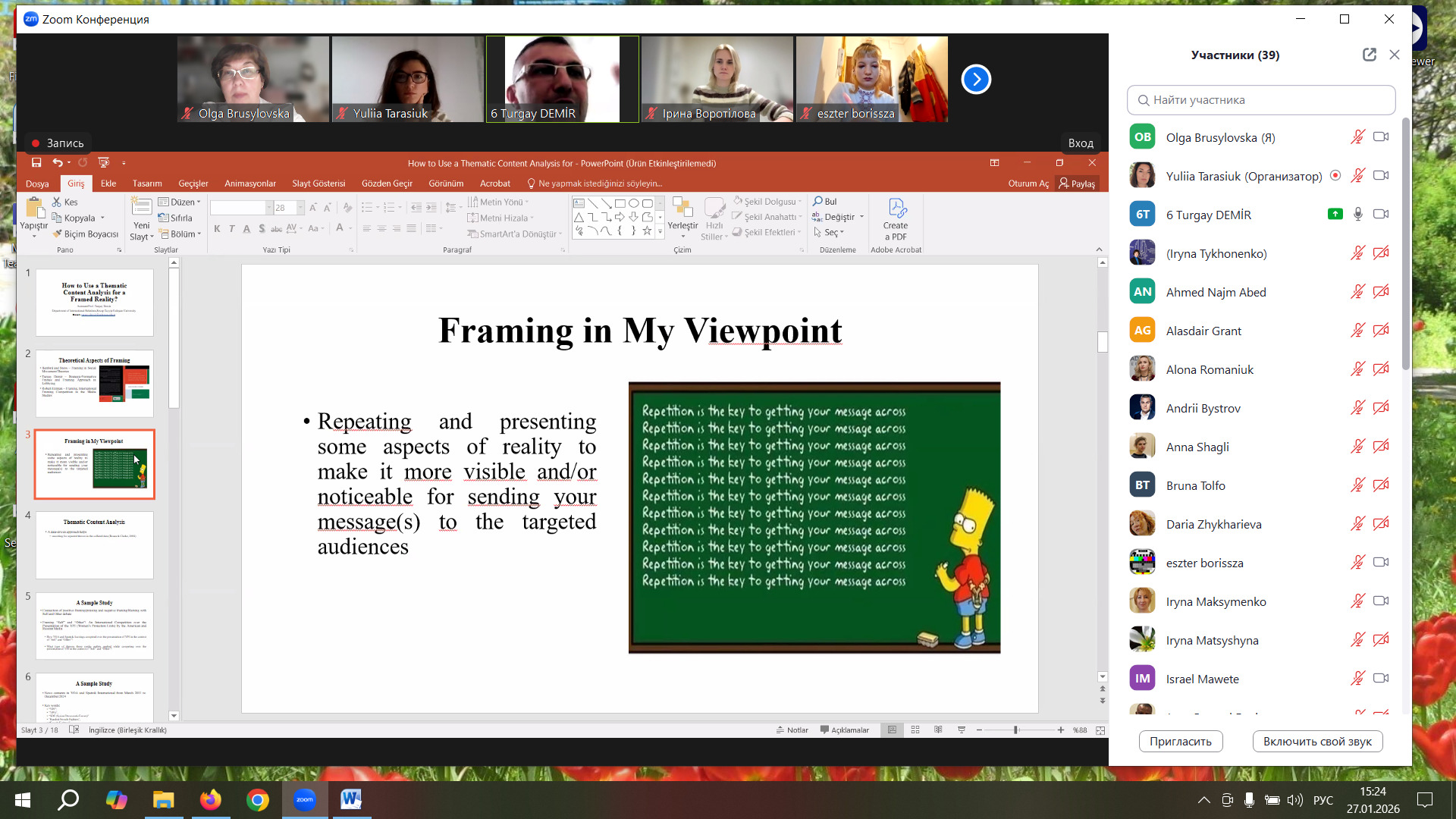
Dr Turgay Demir (Recep Tayyip Erdoğan University, Türkiye) on thematic content analysis and framing;
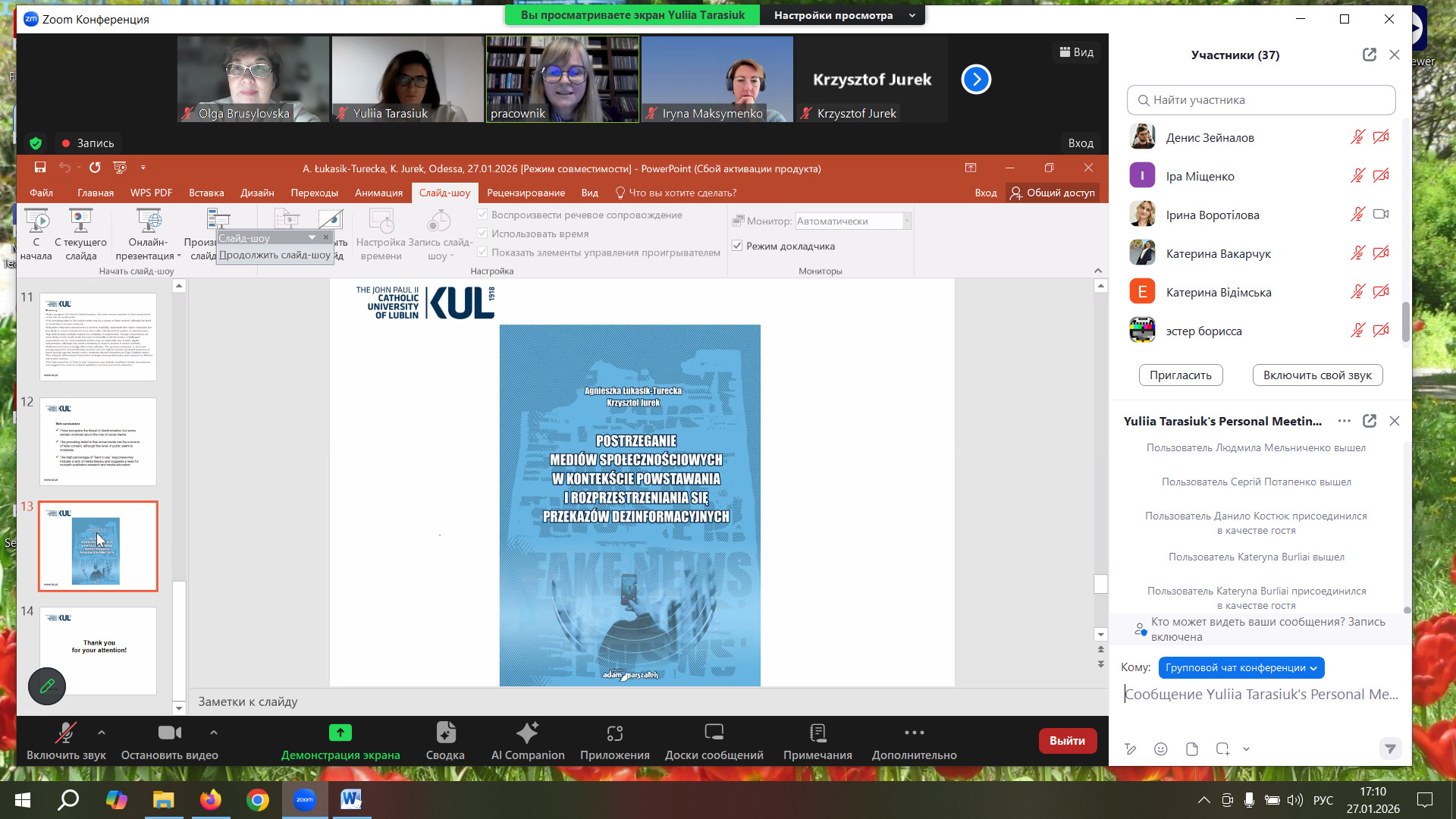
Prof Agnieszka Łukasik-Turecka and Prof Krzysztof Jurek (John Paul II Catholic University of Lublin, Poland) on social media disinformation as a research challenge;
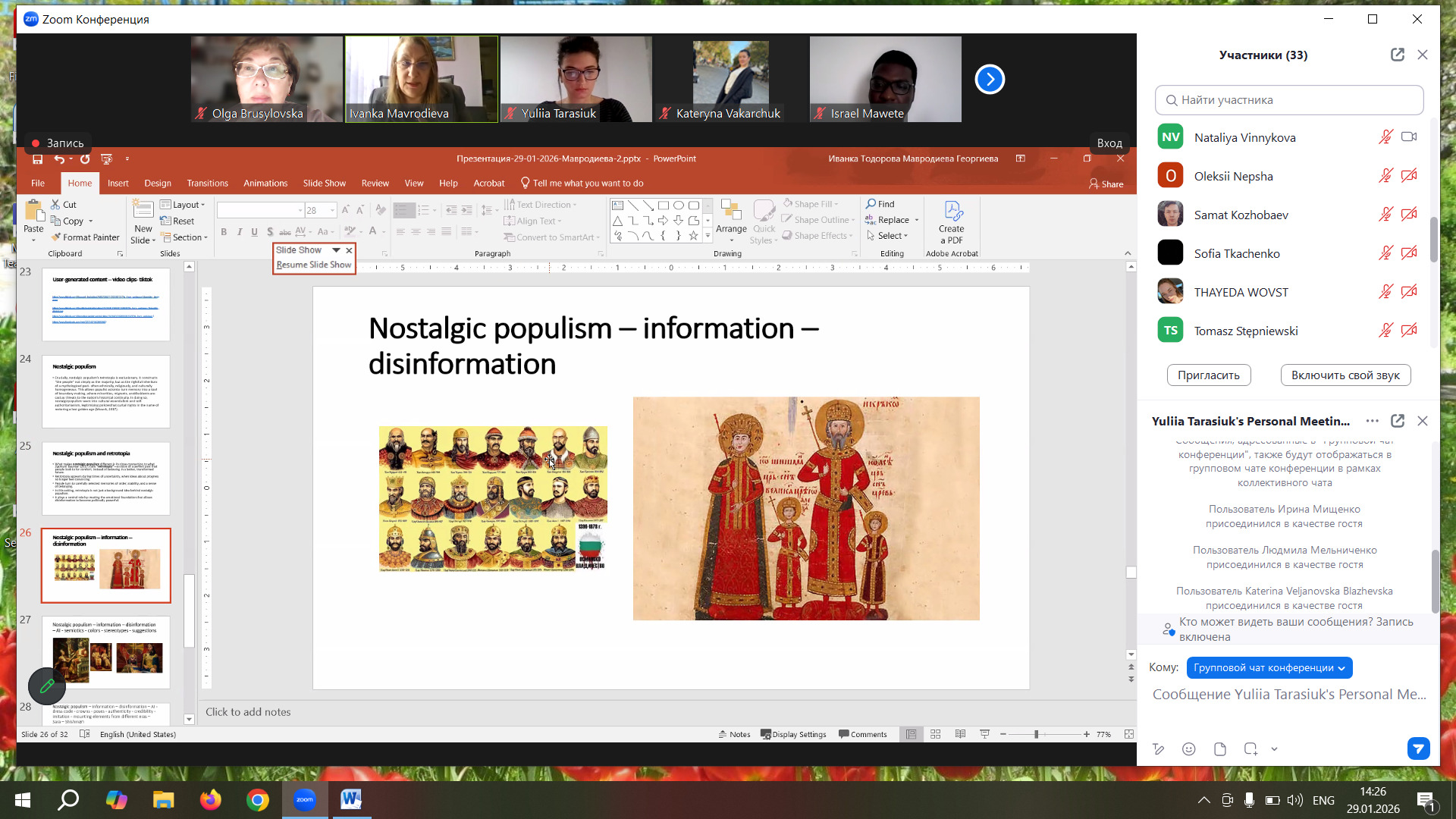
Prof Dr Hab Ivanka Mavrodieva (Sofia University St. Kliment Ohridski, Bulgaria) on misinformation, disinformation and malinformation;
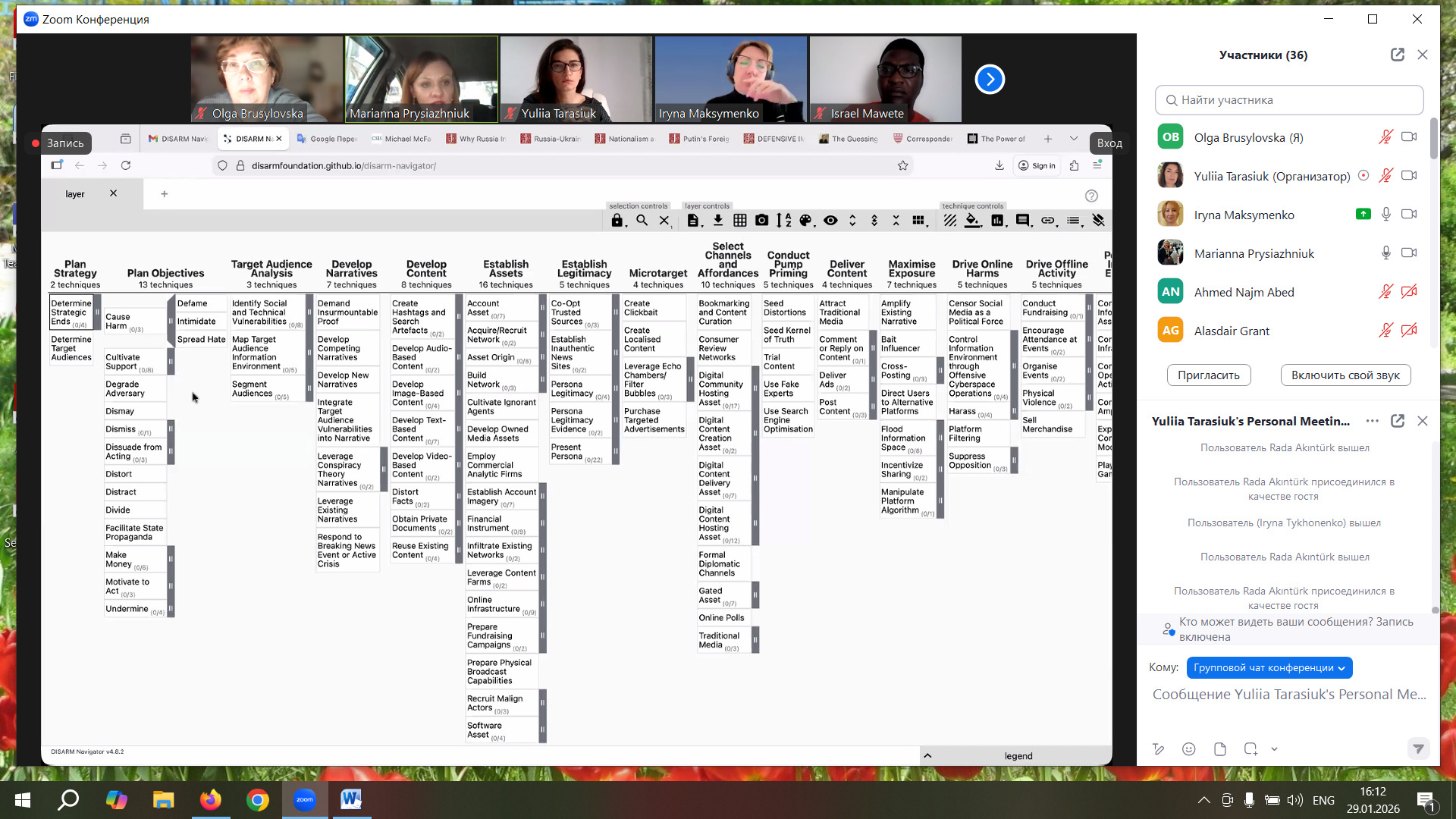
Marianna Prysiazhniuk (University of Bucharest) on DISARM-based analysis of communication campaigns.
The regional and applied case studies included:
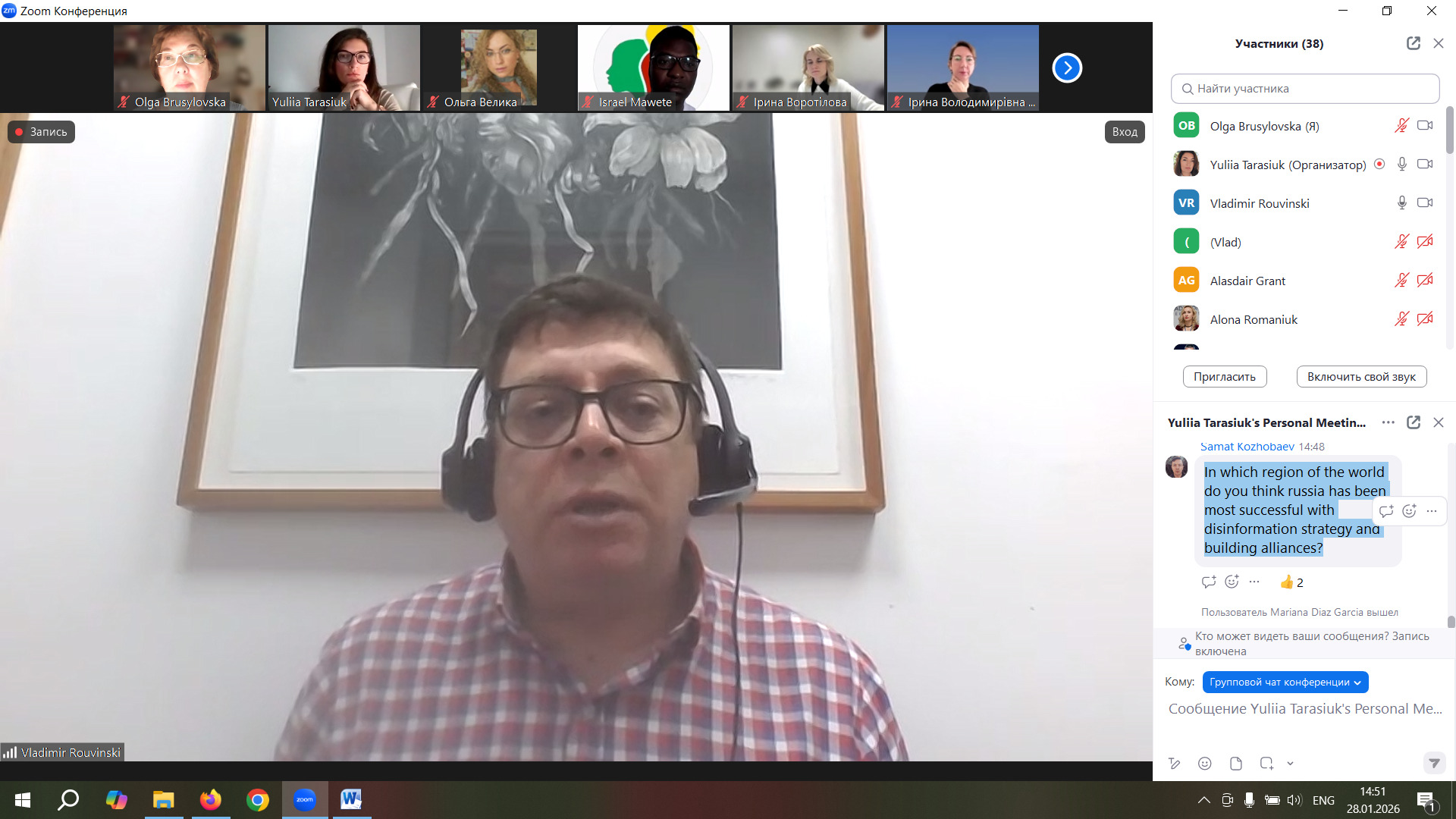
Prof Vladimir Rouvinski (ICESI University, Colombia) on disinformation as a foreign policy instrument;
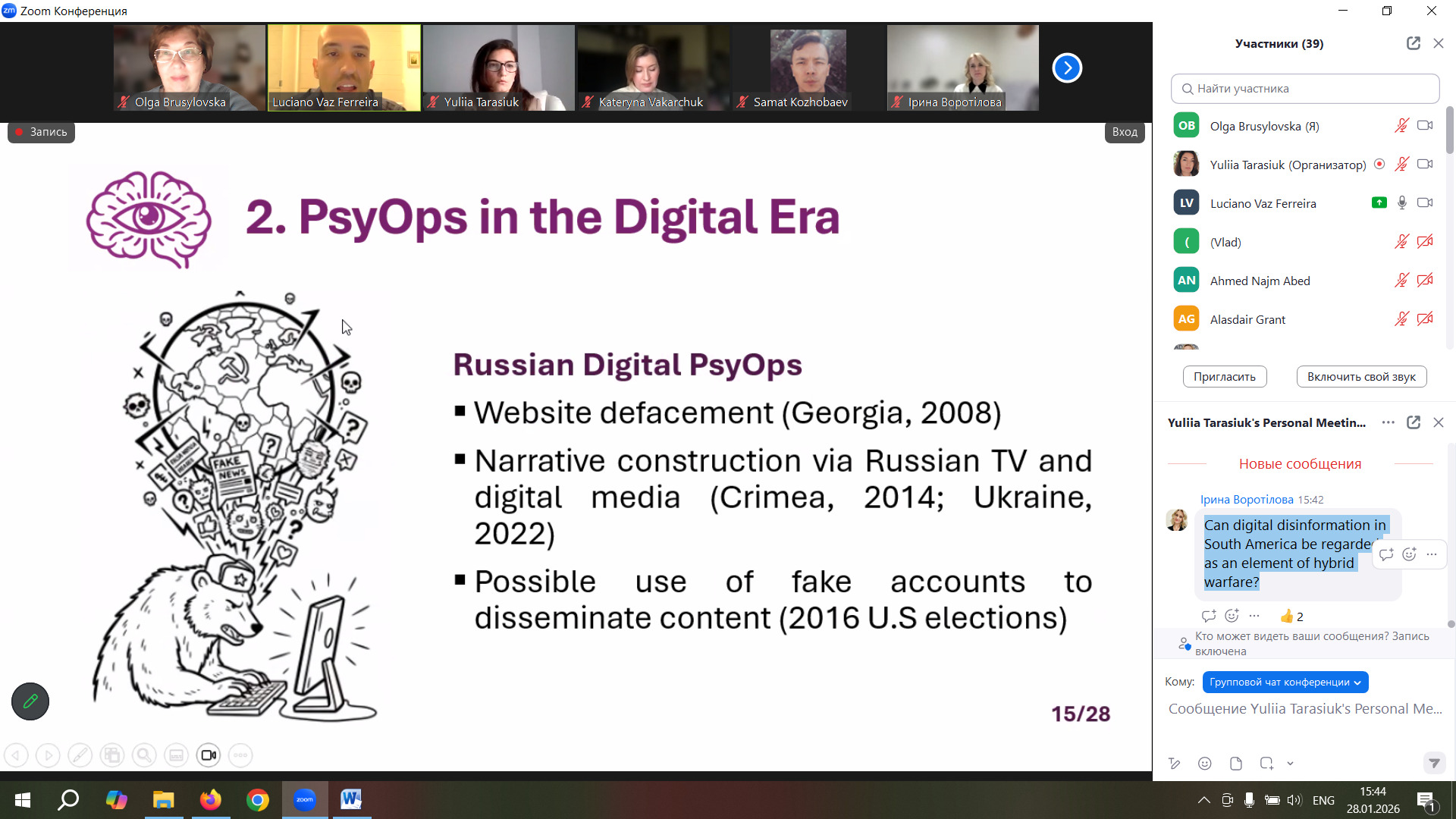
Prof Luciano Vaz Ferreira (Federal University of Pelotas, Brazil) on the weaponisation of digital disinformation in South America;
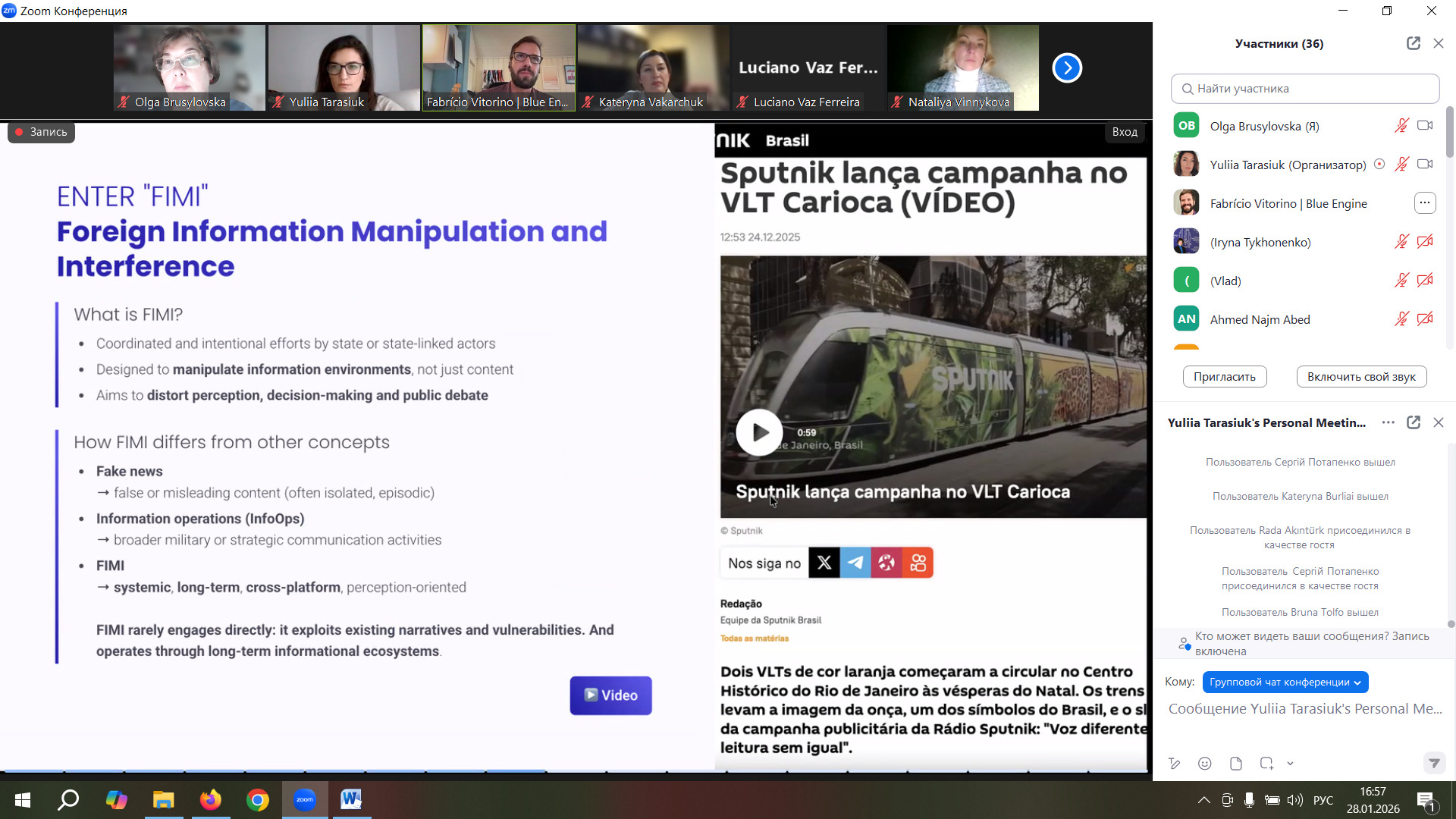
Fabricio Vittorino (Federal University of Santa Catarina, Brazil) on information manipulation in the context of Russia’s war against Ukraine;
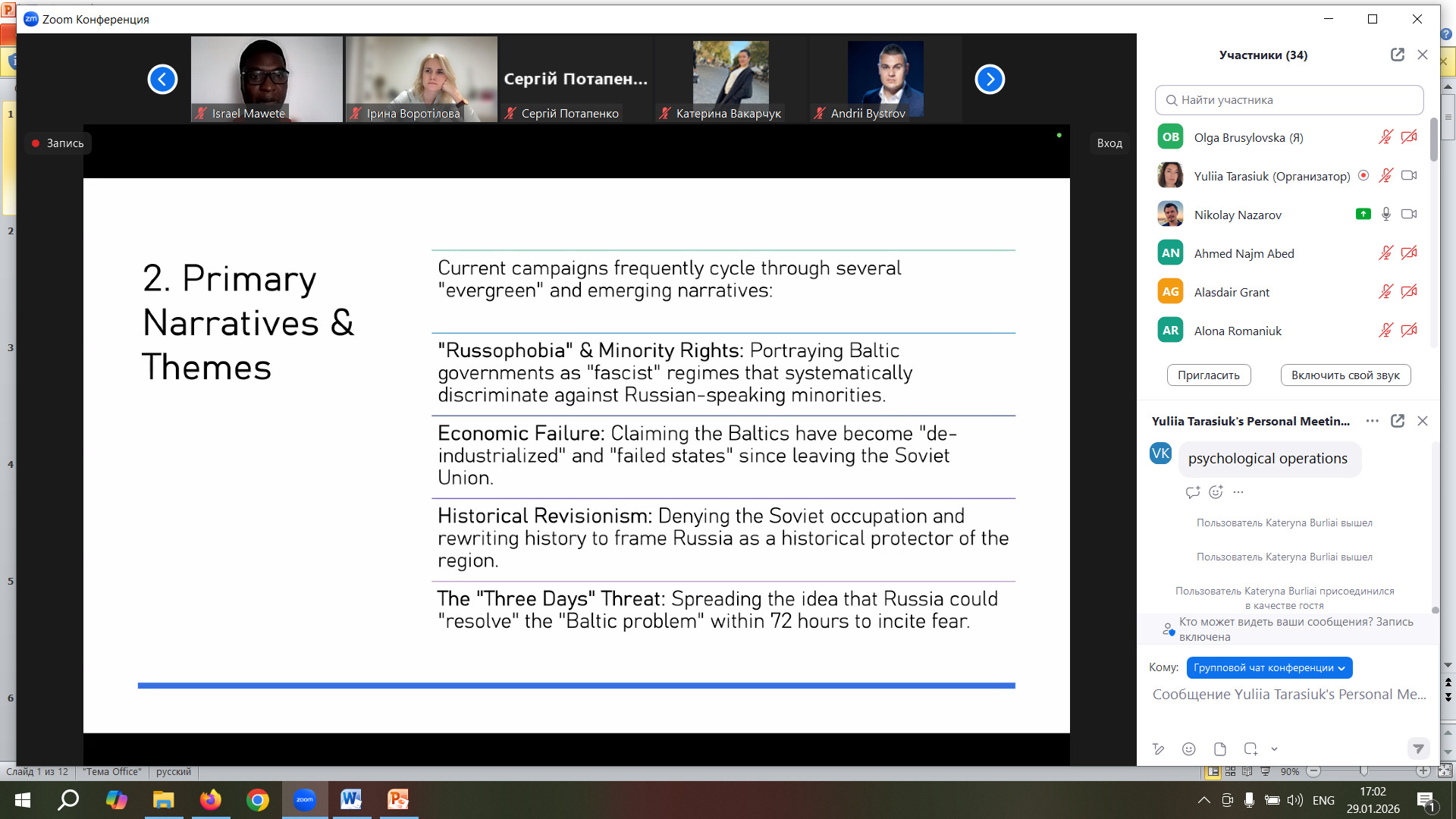
Dr Prof Mykola Nazarov (International Centre for Defence and Security, Estonia) on Russian disinformation strategies in the Baltic States.
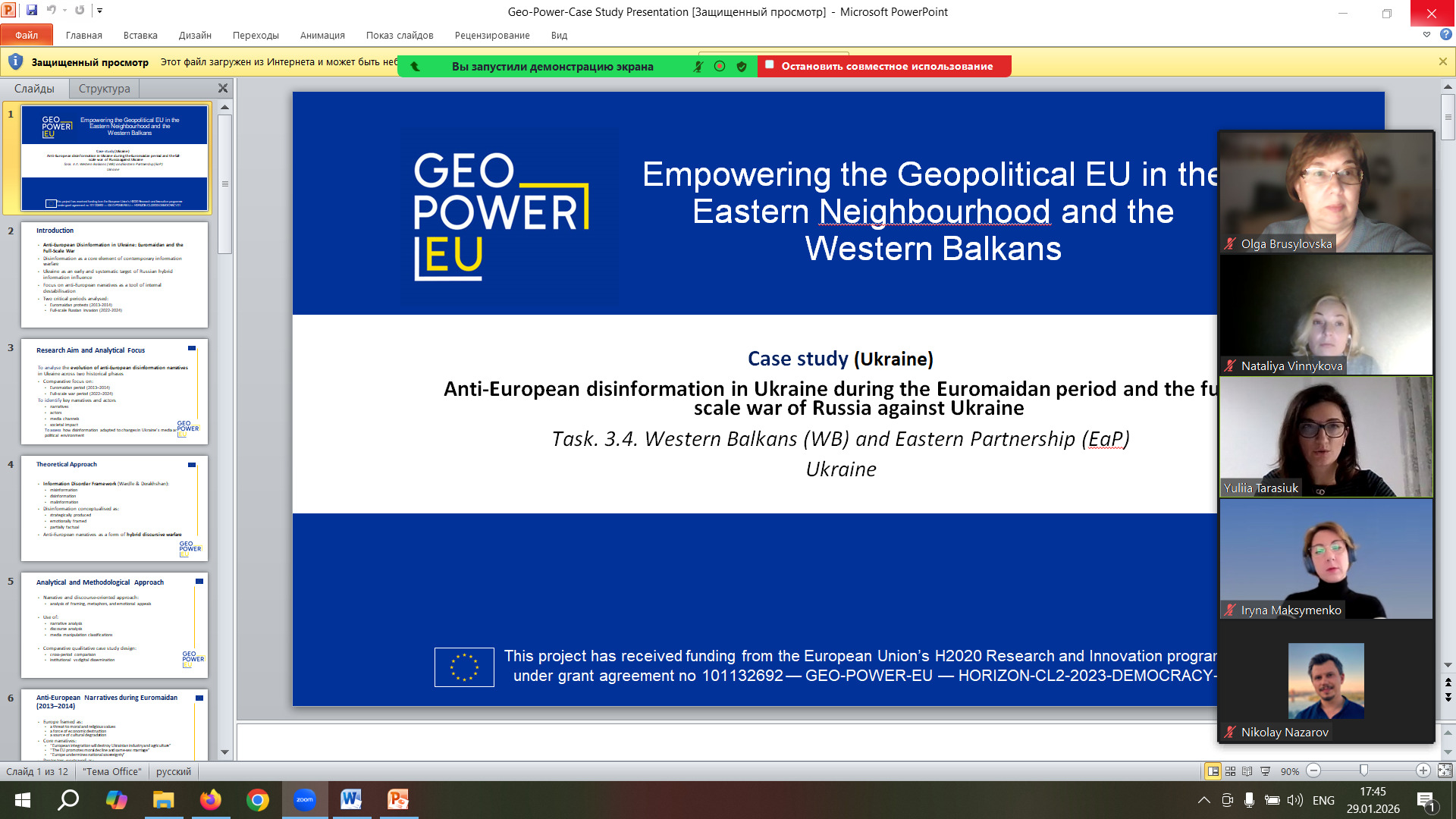
A central highlight was the case study “Anti-European Disinformation in Ukraine during the Euromaidan Period and the Full-Scale War of Russia against Ukraine”, prepared within the GEO-POWER-EU (HORIZON press release Europe) project. The presentation was delivered by Yuliia Tarasiuk, Asst. Professor at Odesa I. I. Mechnikov National University and Research Fellow at OCDS, focusing on the evolution of anti-European narratives, their digital adaptation and societal impact. The presentation was structured as a comparative qualitative case study examining two critical phases: the Euromaidan protests (2013-2014), and the period of Russia’s full-scale invasion of Ukraine (2022–2024). The study analysed anti-European disinformation as a core element of hybrid information warfare, aimed at internal destabilisation. Particular attention was paid to the evolution of anti-European narratives, their transformation and adaptation to changes in Ukraine’s media environment - from institutionalised propaganda disseminated via traditional media to digitally driven disinformation practices on social media platforms and messaging apps. Methodologically, the case study relied on narrative and discourse-oriented analysis, drawing on the information disorder framework (misinformation, disinformation, malinformation), and a comparative assessment of key actors, communication channels and emotional framing strategies. The presentation illustrated how anti-European narratives evolved over time while maintaining their strategic purpose: undermining trust in the European Union, delegitimising Ukraine’s European integration trajectory, and weakening societal resilience under conditions of war.
According to a survey of participants representing all continents of the world about the work of the school, the Second Winter School on Disinformation received many positive reviews. The organization of the school was rated with the highest score of “5” by more than 95% of participants. Participants also noted the well-designed lecture program (89%), the high level of expertise of the speakers (91%), and the professional quality of the discussions (85%). On the points of view of the participants particular attention was drawn to the regional case studies (Latin America and the Baltic states), as well as to the newly presented research methodologies, such as the DISARM method and thematic content analysis. The theoretical part of the presentations, which focused on defining the role of disinformation within the conceptual framework of communication and international relations research, sparked lively discussion and received the highest evaluations of the lecturers’ performance (John Downey (4.9) and Vladimir Rouvinski (4.85). In the survey, participants also emphasized the effective format of the school (expert lecture followed by Q&A and discussion) as well as the clear moderation. Overall, according to the survey results, the work of the Odesa Centre for Disinformation Studies appears to have been effectıve and successful.
Organisers and moderators of the Winter School:
Director: Prof Dr Olga Brusylovska
Programme Coordinator: Yuliia Tarasiuk
Organising Committee: Dr Kateryna Vakarchuk, Dr Iryna Maksymenko


